
Essential How to Automate Video Production: Proven AI Workflows
- Automation Tools, Video Production
- Post production, Technology, Video Production
- October 6, 2026
Introduction
The demand for scalable, high-quality video is surging. Brands need fast, repeatable production without sacrificing creativity, and automated video production at scale can deliver just that. In this post, you’ll learn practical, data-driven AI workflows for automated video production at scale; how to choose tools, design an end-to-end AI video production workflow, and real-world considerations for cost, quality, and compliance. By the end, you’ll see how to balance speed with brand integrity in a fast-moving landscape.

1) Define the AI-driven video production target and ROI
A) Clarify “what is automated video production” for your team
Align goals around speed, cost, volume, consistency, and brand safety. Map value streams from ideation to distribution, including asset creation and localization.
B) Establish measurable KPIs and ROI model
Track time-to-publish, unit cost per video, edit throughput, error rate, and asset reuse rate. Build a lightweight dashboard to monitor improvements from adopting an AI video production workflow.
2) Build a scalable AI video production workflow
A) Core workflow design
Leverage AI-assisted scripts and outlines, automated voiceover or synthesis, stock/assets automation, and auto-edit templates. Ensure versioning, approvals, and localization are embedded in the pipeline.
B) Tooling and integrations
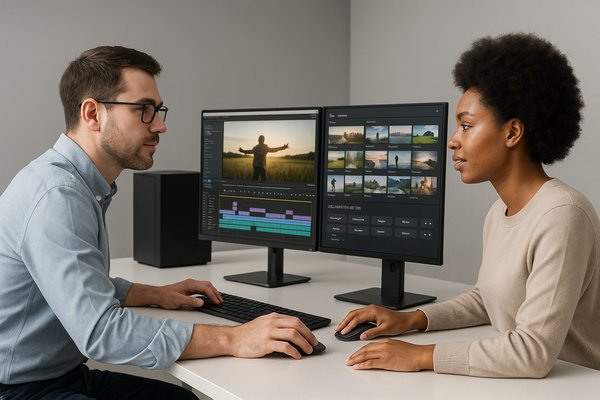
Identify best AI tools for content generation, editing, and rendering, and connect them with asset management, CMS, and distribution platforms. Consider CG Lab automated video solutions as a real-world context for reference.
3) Cost-conscious, high-quality production for creators and teams
A) Low effort, high impact
Template-driven editing, AI-assisted color grading, automated transcripts and captions enable scalable publishing for social, YouTube, and long-form formats.
B) Budget-friendly strategies
Start with a lean MVP, then scale with modular AI components. Optimize compute costs, licensing, and asset reuse to keep the budget in check.
4) Quality, compliance, and localization at scale
A) Quality control and brand safety
Implement guardrails, tone checks, and automated review steps before publish.
B) Localization and international reach
Bake in multilingual VO, subtitles, and regional adaptation to extend global reach.
5) Real-world playbook and case considerations
A) Industry-ready playbook
Outline a step-by-step setup for a 4-week pilot, with milestones and risk mitigation.
B) Regional considerations
In India, explore Mumbai-oriented workflows, cost expectations, and approaches to local vendors and talent.

Conclusion
A well-architected AI video production workflow enables automated video production at scale with measurable gains in speed, cost, and consistency. Next steps: define a pilot, choose tooling aligned with your KPIs, and establish a governance model to sustain momentum. Optional: plan a one-page action plan for the first 60 days.
Sources & References
- Artificial Intelligence Video Production Trends 2026
- AI in Video Production: 2026 Trends & Tools
- AI Video Trends: AI Video Predictions For 2026 & Beyond | LTX Blog
- AI Video Creation Trends 2026: What Works and What to Avoid
- 50+ AI Video Statistics for 2026 | ngram.com
- AI in Video Production: Key Insights & Challenges