How the Visual Effects Industry is Changing in Today’s World
- Film & Television, Visual Effects & VFX Breakdowns
- June 29, 2026
If you’ve been working in the Visual Effects Industry for a while, you can sense that the shift happening right now is different. This isn’t just about better software or faster machines—it’s a structural change in how content is created, delivered, and scaled globally.
The numbers alone reflect this momentum. The combined Animation and VFX market is projected to reach USD 220.40 billion in 2026 and grow to USD 432.23 billion by 2033, at a 10.1% CAGR. Another estimate places it at USD 197.3 billion in 2025, expanding to USD 386.34 billion by 2031. Even when isolating VFX, the growth is strong, with projections ranging from USD 11.19 billion in 2025 to USD 20.29 billion by 2034, and USD 27.59 billion in 2026 to USD 57.95 billion by 2035.
At CG Lab, what we’re seeing on the ground aligns with these Trends—the volume of work isn’t just increasing, it’s becoming more continuous, more complex, and far more global.
A Global Industry That’s No Longer Centralized
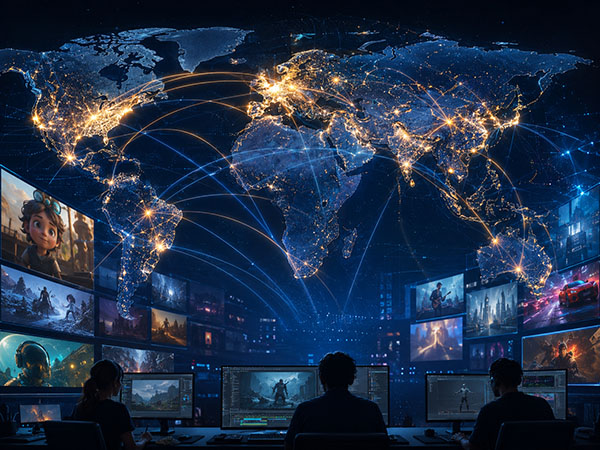
While North America still accounts for roughly 41% of the market, the real Industry Growth is happening across Asia. Regions like India, China, and Korea are evolving from support hubs into core production ecosystems.
India’s AVGC sector, for instance, was valued at USD 2.3 billion in 2019 and is expected to more than double by 2030, with demand for around 2 million skilled professionals. Add to that Netflix setting up a 60-foot virtual production stage in Hyderabad and Disney investing in local studios, and it becomes clear that the Future of VFX is distributed.
From our perspective, this global shift has fundamentally changed how teams operate. Work is no longer tied to geography—it’s tied to capability and speed.
Streaming Changed Everything
One of the biggest catalysts behind this shift has been Streaming Services.
With Netflix planning to spend USD 18 billion and Disney USD 24 billion on content, the scale of Content Creation has expanded dramatically. But what’s more important is the frequency. Instead of a few large projects, studios are now handling multiple high-end productions simultaneously.
This demand is pushing the VFX market to grow by USD 15.24 billion between 2025 and 2029, at a 17.2% CAGR.
For studios like ours, this translates into a constant pipeline—less downtime, tighter timelines, and a greater need for reliable partners who can scale quickly without compromising quality.
Technology is Redefining Workflows
The role of Technology in VFX has shifted from being supportive to being foundational.
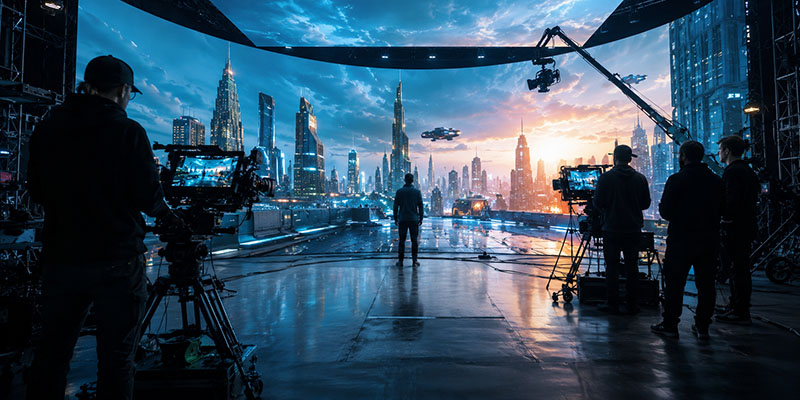
Real-time Rendering and virtual production are a good example of this. The virtual production market, valued at USD 2.9 billion in 2025, is expected to reach USD 18.5 billion by 2035, growing at 21.1% CAGR.
What this means in practice is simple—decisions that were once made in post are now happening on set. Directors can see near-final shots instantly, reducing iteration cycles and improving efficiency.
At the same time, tools driven by Artificial Intelligence are transforming day-to-day workflows. The AI in VFX market is projected to grow from USD 4.87 billion in 2025 to USD 28.66 billion by 2035, at a 19.46% CAGR.
Tasks like roto, paint, and cleanup—areas we’ve specialized in for years—are now being augmented by AI. In some cases, like The Mandalorian, AI has reduced rotoscoping time by 90%. But in reality, AI isn’t replacing artists. It’s changing how they work, allowing them to focus more on creative decision-making rather than repetitive tasks.
Where Innovation is Happening
The real Innovation in the industry lies in how different technologies are coming together. It’s no longer just about VFX—it’s about the convergence of multiple mediums.
Here’s how that landscape is evolving:
| Area | What’s Changing |
|---|---|
| Artificial Intelligence | Automating repetitive tasks and accelerating workflows |
| Real-time Rendering | Enabling instant feedback and faster production cycles |
| Gaming Engines | Bridging film and interactive content |
| Virtual Reality & Augmented Reality | Expanding storytelling beyond traditional screens |
| Remote Collaboration | Making global pipelines seamless |
The Gaming industry, expected to reach USD 197.7 billion by 2025, is also influencing VFX pipelines. Tools like Unreal Engine are now used across both Gaming and film, blurring the line between interactive and cinematic experiences.
At CG Lab, we’re increasingly seeing projects that sit at this intersection—where VFX, Animation, and real-time workflows all merge into a single pipeline.
The Rise of Remote Collaboration
Another major shift has been how teams collaborate.
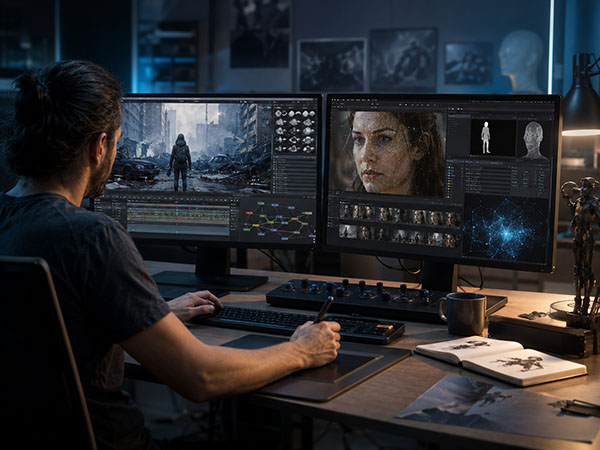
Remote Collaboration is no longer a temporary solution—it’s the default. Artists, supervisors, and clients now work across multiple time zones, using cloud-based pipelines to stay connected.
This has opened up opportunities for studios globally, but it has also raised expectations. Turnarounds are faster, communication needs to be tighter, and pipelines must be robust enough to handle distributed workflows.
From a studio standpoint, this has made adaptability just as important as technical skill.
Challenges Beneath the Growth
Despite all the Industry Growth, there are real challenges that can’t be ignored.
- High infrastructure costs still act as a barrier, with workstations often costing USD 10,000+, and large investments required for storage and rendering.
- Talent shortages continue to be a concern, especially in specialized areas like FX and technical direction.
- GPU demand from AI and other industries is creating supply constraints.
- Security risks have increased as pipelines move to the cloud.
- And while conditions are improving, workload pressure remains a reality across the industry.
Even with these challenges, the direction of the industry is clear—it’s expanding, evolving, and becoming more interconnected.
Looking Ahead
The Future of the Visual Effects Industry will be defined by how well it balances scale with creativity.
Artificial Intelligence will continue to evolve as a creative partner. Real-time Rendering will become standard across more stages of production. Virtual Reality and Augmented Reality will push storytelling into more immersive spaces. And Remote Collaboration will continue to redefine how teams are built.
What won’t change is the core of what we do.
At its heart, VFX is still about storytelling—about making the impossible feel real. The tools may evolve, the pipelines may shift, but the need for strong creative execution remains constant.
And from where we stand at CG Lab, the opportunity isn’t just in keeping up with these Trends—it’s in adapting to them early, building smarter pipelines, and continuing to deliver work that fits into this fast-changing ecosystem.
Because in this industry, the Future doesn’t arrive slowly.
It shows up in your next project.