
EDUCATIONLIVE · GMAIL WEB & APP
School AI Agent
Lists what is due for each child from school email and the school calendar.
Read the case study →Elite SP Realtors, a South Mumbai brokerage, hired CG Lab to automate part of their daily work. The Property Inventory Suite reads broker messages from WhatsApp groups and Gmail, including flyers and images, and turns them into one clean inventory, matched against client requirements.
The team searches one shared inventory from a laptop or a phone browser. Click through the views.
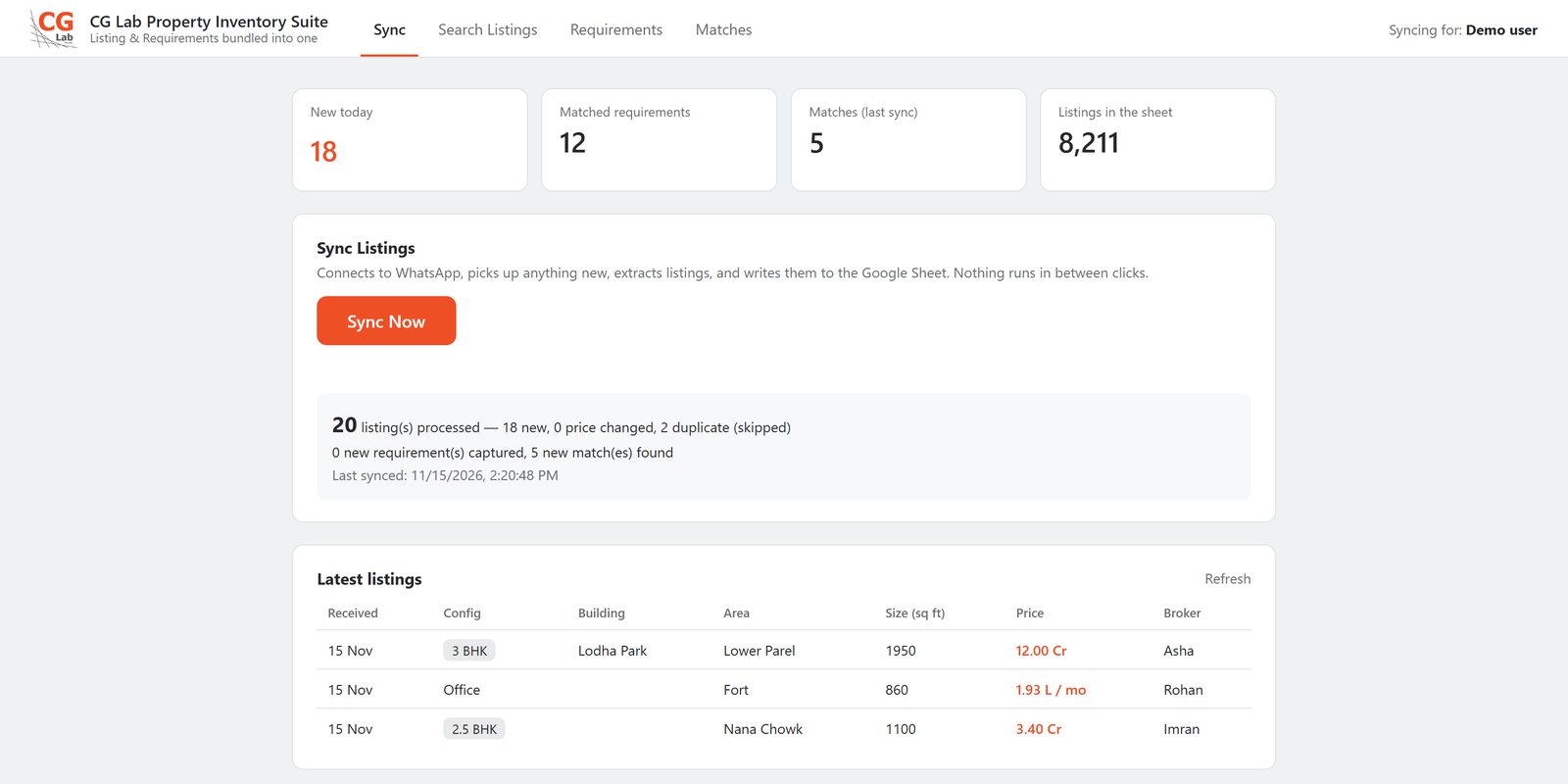


Screens use fictional demo data. No real brokers, phone numbers or clients.
Figures as of mid-November 2026. In production since October 2026 with a five-person team.
The brief was simple. When a prospective client shares a requirement, say a 3 BHK, a minimum size and a few areas, get back to them with matching properties, fast.
Speed decides the deal. A prospective client has usually contacted more than one broker, and tends to go with whoever comes back first with properties that actually match. The old way meant going through several WhatsApp groups and many emails by hand. It took many hours, sometimes more than a day.
The AI proposes and fixed rules decide. People stay in charge. Everything lands in one shared Google Sheet.
Every sync records the AI tokens it used and converts them to rupees. These are averages from the tool’s own log across its first month in production, for a five-person team.
| Measure | Value |
|---|---|
| Messages read by the AI in the first month | more than 15,000 |
| Messages on an average working day | about 750 |
| New listings added to the inventory | more than 5,500 |
| AI calls made | about 9,500 |
| Tokens processed | about 100 million |
Estimates calculated from token counts at the AI provider’s published prices, at ₹95 to the US dollar. The first weeks include one-off catch-up runs, so they overstate the steady-state cost.
It runs on each person’s Windows laptop and syncs when someone clicks Sync Now. It is not an always-on cloud service yet, and a hosted version is a natural next step. It depends on an unofficial WhatsApp connection, which is why it is deliberately read-only. The AI can misread an unusual format, which is why important fields are re-validated by rules, unclear locations go to a person, and the team can correct the sheet directly.
No. It reads WhatsApp groups, a shared Gmail inbox and images such as flyers and brochures, and puts everything in one inventory.
No. The connection is read-only. It never sends messages, read receipts or presence, and it only listens to groups your team chooses.
On average about 19 paise per message read, and about half a rupee per listing captured. These are estimates from token counts; the AI provider’s own console is the source of truth for the actual bill.
Sometimes. That is why every important field is re-checked by fixed rules, unclear locations go to a person, and the team can correct the sheet directly.
In a Google Sheet your team already uses. There are no servers to pay for or maintain.
Yes. The idea is not specific to one firm. We adapt the fields, areas and rules to how your team works. A free AI audit is the place to start.
Lists what is due for each child from school email and the school calendar.
Read the case study →A patient portal with aligner reminders and progress photo prompts.
Read the case study →Not sure what to automate? We start with a free AI audit.
See how we work →For a brokerage, a clinic, a school or an office. We start with a free AI audit.